
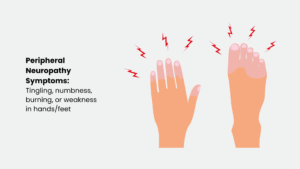
Do you feel tingling, numbness, burning, or weakness in your hands or feet? These could be signs of peripheral neuropathy, a condition often linked to diabetes, nutrient deficiencies, or other health factors.
But what if these symptoms first appear or get worse around the time you start menopause? For many women, hormone shifts might be playing a hidden role. So, the big question is: Could Hormone Replacement Therapy (HRT) offer relief for nerve pain and function?
Let’s break down the evidence and see why this connection matters.
What The Science Says: Hormones and Nerve Health
Research suggests a strong link between your sex hormones (like estrogen and progesterone) and the health of your nervous system.
1. The Low Hormone-Low Nerve Function Link
Studies comparing postmenopausal women found that those with peripheral neuropathy often had significantly lower levels of estrogen and progesterone than women who did not have the condition. Furthermore, their nerves were physically slower at sending signals (reduced conduction velocity).¹
The Takeaway: This research suggests that when hormone levels drop after menopause, the nerves might lose a layer of protection, making them more vulnerable.
2. HRT May Improve Nerve Speed
While research is still new, early studies looking at women on HRT suggested that the therapy might help improve how quickly and effectively nerves transmit signals.²
3. How Estrogen Calms Pain
Scientists have found that estrogen has a direct influence on the way the brain and spinal cord process pain. Estrogen can quiet down certain pain receptors (specifically the receptors) that are responsible for sending out neuropathic (abnormal nerve) pain signals.³
Simple Translation: Estrogen doesn’t just treat hot flashes. It acts like a natural pain modulator in the nervous system.
4. The Protective Trend
Large-scale studies have observed that postmenopausal women who use HRT tend to have a lower chance of developing a common type of nerve damage compared to those who don’t use hormones. This hints at a protective benefit.
How HRT Might Help: The Body’s Mechanisms
If HRT helps, it’s likely due to several powerful actions hormones have on the body:
Is HRT Right For Your Neuropathy?
HRT is not a universal cure for neuropathy, but it is a valid option for specific cases.
Best Candidates for HRT Consideration:
- Women whose nerve symptoms (neuropathy began or notably worsened exactly when they went through the menopausal transition).
- Women who have been fully evaluated for all other possible causes (like diabetes or nutrient deficiencies).
Limitations:
- It’s Part of a Plan: HRT is a complement to treatment, not a replacement. You still need to manage blood sugar, correct vitamin deficiencies ( is critical), and stay physically active.
- Timing is Key: HRT often works best when started closer to the onset of menopause (the “Window of Opportunity”). Starting it many years later may limit the neural benefits.
- Risk vs. Benefit: HRT carries known risks (like blood clots or certain cancer risks). The decision must be made by weighing your personal health profile, family history, and the severity of your symptoms.
The Holistic Approach: Support Your Nerves Naturally
From a naturopathic and holistic perspective, combining HRT with supportive care gives you the best chance for symptom relief:
The evidence is growing that HRT may benefit some women with peripheral neuropathy, especially those whose nerve issues are clearly tied to hormonal decline.
If you suspect your numbness, tingling, or weakness is connected to your menopausal changes, it’s worth discussing this option with an informed healthcare provider. An integrated approach combining personalized hormones with excellent nutritional and lifestyle support offers the most comprehensive path to improvement.
Struggling with symptoms of peripheral neuropathy?
Schedule your discovery call today and explore safe, effective ways to restore balance and improve quality of life.
Sources:
-
Singh, A., et al. (2016). Motor Nerve Conduction Velocity in Postmenopausal Women with Peripheral Neuropathy. Journal of Clinical and Diagnostic Research. Retrieved from https://www.ncbi.nlm.nih.gov/pmc/articles/PMC5296423/
-
National Journal of Physiology, Pharmacy and Pharmacology. (2021). Hormone Therapy and Nerve Conduction Study in Postmenopausal Women. Retrieved from https://www.njppp.com/fulltext/28-1629106516.pdf
-
Deng, C., et al. (2017). Estrogen affects neuropathic pain through upregulating NMDAR1 in dorsal root ganglia of rats. Neural Regeneration Research. Retrieved from https://www.ncbi.nlm.nih.gov/pmc/articles/PMC5399726/