If you’re dragging through the day, shedding more hair than usual, or both, low ferritin could be part of the story. Ferritin is the protein that stores iron in your body. When ferritin is low, your tissues, including hair follicles and muscles, don’t get the iron they need to function optimally. That can translate into fatigue, brain fog, shortness of breath with exertion, restless legs, and increased hair shedding. But here’s the catch: simply taking iron without understanding why ferritin is low can mask an underlying issue. This guide explains how low ferritin contributes to fatigue and hair loss, what labs to request, how to uncover the root cause, and practical steps, including the simple act of cooking with a cast-iron skillet, to support healthy iron levels over time.
At our Temecula-based clinic, we take a functional, naturopathic approach to low ferritin, combining careful evaluation, targeted nutrition, and personalized strategies to rebuild iron stores safely and sustainably.
Why Ferritin Matters for Energy and Hair
 Ferritin reflects your iron reserves. Low ferritin is a sensitive marker of iron deficiency, often preceding changes in hemoglobin. In dermatology settings, ferritin testing is frequently part of the evaluation for women with diffuse shedding (telogen effluvium) and thinning; low ferritin can suggest iron deficiency as a contributor to hair changes. Evidence linking iron status and diffuse hair loss is mixed, but multiple studies show lower ferritin levels in women with excessive shedding, supporting ferritin testing as part of the workup.¹ ² ³ ⁴
Iron is essential for oxygen transport (via hemoglobin) and cellular energy (ATP) production. When iron availability is limited, tissues receive less oxygen and cellular energy production drops—experienced as fatigue, poor stamina, and decreased exercise tolerance. Treating iron deficiency, even in non-anemic adults with low ferritin, has been shown to improve fatigue and functional capacity.⁵ ⁶ ⁷
How Low Is “Low”? Interpreting Ferritin (and Why Context Matters)
Population guidance vs. clinical context. Historically, the World Health Organization used ferritin <15 µg/L as a cutoff for iron deficiency in otherwise healthy adults. More recent guidance acknowledges that ferritin is an acute-phase reactant and recommends higher cutoffs where inflammation is present (e.g., ~70 µg/L in adults with inflammatory conditions).⁸
Clinical practice thresholds. In primary care, many clinicians consider ferritin <30 µg/L suggestive of deficiency (especially with compatible symptoms), and evaluation typically includes a complete blood count (CBC), iron, total iron-binding capacity (TIBC), transferrin saturation, and inflammatory markers (e.g., CRP) to interpret ferritin accurately.⁹ ¹⁰
Hair-specific context. Some dermatology literature suggests that ferritin below ~30–40 ng/mL may be suboptimal for hair cycling in susceptible individuals, though consensus is not uniform and treatment decisions should consider the overall clinical picture.¹ ² ³ ⁴
Bottom line: Ask for a panel—ferritin, CBC, iron, TIBC, transferrin saturation, and CRP—and interpret the numbers in context rather than relying on a single cutoff.⁸ ⁹ ¹⁰
Why Ferritin Gets Low: Find the Root Cause
Replacing iron can help, but understanding why ferritin is low prevents the problem from returning. Common drivers include:
1) Blood loss
-
Heavy or frequent periods (menorrhagia), fibroids, endometriosis.
-
Occult gastrointestinal bleeding (peptic ulcer, gastritis, IBD, polyps, age-related colorectal risk).
Identifying and addressing sources of bleeding is a cornerstone of evaluation in iron deficiency and iron-deficiency anemia.⁹ ¹⁰
2) Low intake
-
Vegan/vegetarian patterns without careful planning.
-
Low intake of heme iron (meat/seafood) or iron-rich plant foods (legumes, leafy greens, seeds).⁹ ¹⁰
3) Poor absorption
-
Celiac disease, inflammatory bowel disease, atrophic gastritis.
-
Helicobacter pylori infection, history of bariatric surgery.
-
Reduced stomach acid (e.g., chronic proton pump inhibitor use) can impair non-heme iron absorption.⁹ ¹⁰
4) Higher needs
-
Pregnancy, adolescence, endurance training, and periods of rapid growth or recovery.⁹ ¹⁰
A thorough history (bleeding, GI symptoms, medications, diet), targeted labs, and when appropriate, GI evaluation help pinpoint the cause and guide treatment.⁹ ¹⁰
Fatigue & Hair Loss: How Low Ferritin Contributes
Fatigue, weakness, reduced stamina. When iron is limited, oxygen delivery and mitochondrial ATP production decline. Randomized trials and systematic reviews in non-anemic adults with low ferritin show that iron therapy can meaningfully reduce fatigue and improve functional capacity.⁵ ⁶ ⁷
Diffuse hair shedding (telogen effluvium). Hair follicles are metabolically active and sensitive to iron availability. Observational studies report lower ferritin in women with diffuse shedding; some authors advocate optimizing ferritin as part of management (within a broader dermatologic plan), while acknowledging that not all patients will respond solely to iron repletion.¹ ² ³ ⁴
Testing: What to Ask For
-
Ferritin (primary marker of iron stores).
-
CBC (hemoglobin, hematocrit, red cell indices to characterize anemia if present).
-
Serum iron, TIBC, transferrin saturation (to assess transport and utilization).
-
CRP (to interpret ferritin in inflammatory states).
If fatigue and hair loss are multifactorial, consider B12, folate, TSH, and vitamin D (vitamin D insufficiency may co-occur with diffuse shedding in some cohorts).⁴ If ferritin is low, evaluate menstrual history, bleeding risk, GI symptoms, and use celiac serologies or H. pylori testing when indicated; consider GI referral (e.g., endoscopy/colonoscopy) based on age and risk factors.⁹ ¹⁰
How to Rebuild Iron Stores (and Keep Them Up)
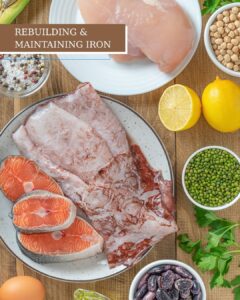 1) Food First: Build an Iron-Smart Plate
-
Heme iron (better absorbed): beef, lamb, dark meat poultry, shellfish (oysters, clams).
-
Non-heme iron: lentils, beans, tofu/tempeh, pumpkin seeds, quinoa, spinach.
-
Boost absorption with vitamin C–rich foods (citrus, berries, bell pepper) eaten alongside iron sources.
-
Reduce inhibitors near iron-rich meals: tea/coffee (polyphenols), calcium supplements, and high-phytate foods in the same sitting.⁹ ¹⁰
2) Cast-Iron Cooking: A Simple Daily Habit
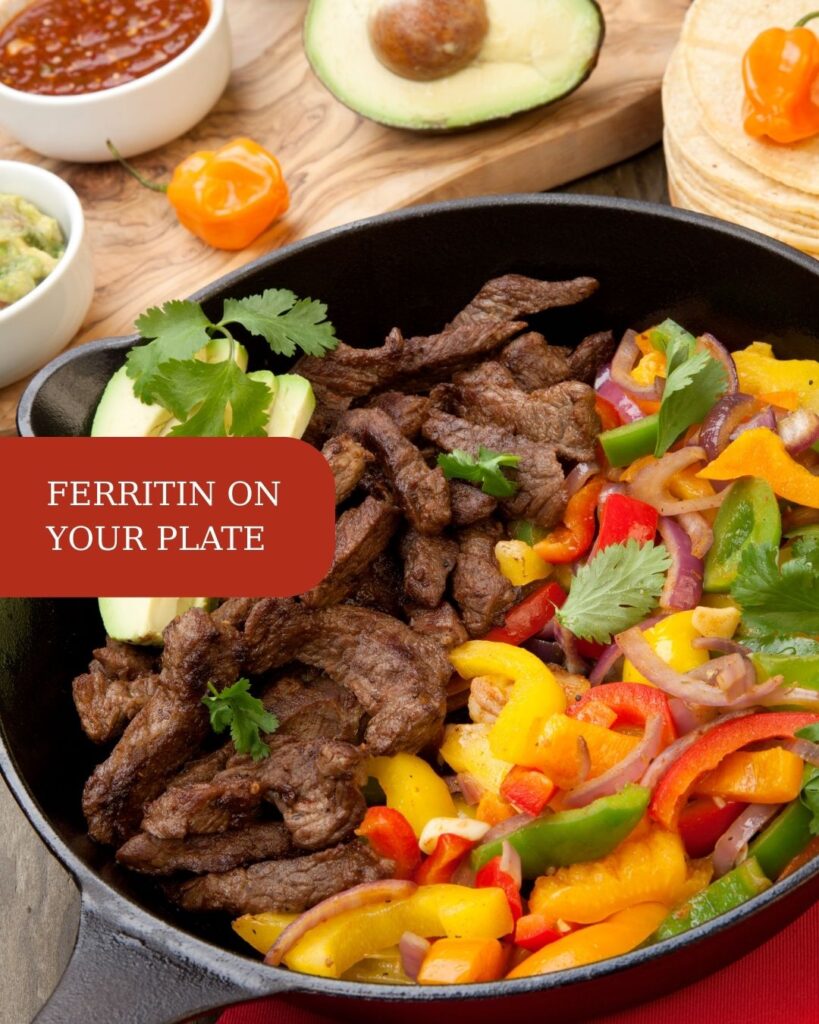
Cooking acidic or moist foods (think tomato sauce, stews, chili) in cast-iron cookware can increase the iron content of meals, and consistent use has improved iron status in clinical and community trials.¹¹ ¹² Effects vary by food type, acidity, moisture, and cooking time, but cast iron is a safe, inexpensive adjunct, especially for those who struggle to meet iron needs from food alone.¹¹ ¹²
3) Strategic Supplementation (When Appropriate)
-
Oral iron (e.g., ferrous sulfate, gluconate, fumarate) can rebuild ferritin. Many patients tolerate lower-or alternate-day dosing; your clinician can personalize the form and schedule.
-
Expect several months to replete stores; continue iron for 2–3 months after hemoglobin normalizes to rebuild ferritin adequately.⁹
-
Treating iron deficiency (with or without anemia) typically improves fatigue and physical capacity; decisions to treat non-anemic iron deficiency are individualized and should be monitored with follow-up labs.⁵ ⁶ ⁷ ⁹
4) Correct the Cause
Sustainable results come from addressing why ferritin fell: manage heavy menstrual bleeding, treat H. pylori or celiac disease, reassess long-term acid suppression when appropriate, optimize dietary quality, and correct other contributing factors (e.g., frequent blood donation).⁹ ¹⁰
When to See a Professional (and How We Can Help in Temecula)
Seek care if you experience:
-
Ongoing fatigue, breathlessness with exertion, reduced exercise tolerance, or chest discomfort.
-
Diffuse hair shedding or noticeable thinning.
-
Pica (craving ice or non-food items), restless legs, frequent headaches, or brittle nails.
-
Heavy periods or signs of GI bleeding (black stools, visible blood in stool).
-
Poor response to self-directed iron changes or recurrent low ferritin.
At our Temecula clinic, we take a naturopathic approach to uncovering the root causes of low ferritin. This includes a thorough health history, targeted functional labs (such as ferritin and iron studies), assessment of menstrual and digestive health, and a personalized care plan. Your plan may incorporate nutrient-rich dietary upgrades, cast-iron cooking strategies, vitamin C pairing for better absorption, and evidence-informed supplementation. Our goal is not only to restore healthy iron levels but also to address the underlying reasons they became depleted in the first place.
Nourishing Insights
Low ferritin is a common, under-recognized driver of fatigue and diffuse hair shedding. Testing ferritin (with supportive iron markers) offers clarity, but lasting results come from addressing the root cause: blood loss, low intake, malabsorption, or increased needs. With an individualized plan that emphasizes iron-smart nutrition, simple habits like cast-iron cooking, and targeted supplementation when appropriate, you can rebuild energy and support healthy hair growth safely and sustainably.⁵ ⁶ ⁷ ⁹ ¹¹ ¹²
Ready to feel in sync with your body again?
Schedule your discovery call today and begin your journey toward replenished iron stores, steady energy, and stronger hair naturally.
Sources:
¹ Kantor, J., & Kessler, L. J. (1998). Iron deficiency and telogen effluvium: A retrospective study. Journal of the American Academy of Dermatology, 38(3), 418–425. Retrieved from https://pubmed.ncbi.nlm.nih.gov/9506448/
² Trost, L. B., Bergfeld, W. F., & Calogeras, E. (2006). The diagnosis and treatment of iron deficiency and its potential relationship to hair loss. Journal of the American Academy of Dermatology, 54(5), 824–844. Retrieved from https://pubmed.ncbi.nlm.nih.gov/16635664/
³ Deloche, C., Bastien, P., Chadoutaud, S., et al. (2007). Low iron stores: A risk factor for excessive hair loss in non-menopausal women. European Journal of Dermatology, 17(6), 507–512. Retrieved from https://pubmed.ncbi.nlm.nih.gov/18073009/
⁴ Rasheed, H., Mahgoub, D., Hegazy, R., et al. (2013). Serum ferritin and vitamin D in female hair loss: Do they play a role? Skin Pharmacology and Physiology, 26(2), 101–107. Retrieved from https://pubmed.ncbi.nlm.nih.gov/23257784/
⁵ Krayenbuehl, P. A., Battegay, E., Breymann, C., Furrer, J., & Schulthess, G. (2011). Intravenous iron for the treatment of fatigue in nonanemic, premenopausal women with low serum ferritin concentration. Blood, 118(12), 3222–3227. Retrieved from https://pubmed.ncbi.nlm.nih.gov/21705493/
⁶ Verdon, F., et al. (2003). Iron supplementation for unexplained fatigue in non-anaemic women: Double blind randomised placebo controlled trial. BMJ, 326(7399), 1124. Retrieved from https://pubmed.ncbi.nlm.nih.gov/12763985/
⁷ Houston, B. L., Hurrie, D., Graham, J., et al. (2018). Efficacy of iron supplementation on fatigue and physical capacity in non-anaemic iron-deficient adults: Systematic review of RCTs. BMJ Open, 8(4), e019240. Retrieved from https://pubmed.ncbi.nlm.nih.gov/29674357/
⁸ World Health Organization (WHO). (2020). WHO guideline on use of ferritin concentrations to assess iron status in individuals and populations. Retrieved from https://www.who.int/publications/i/item/9789240000124
⁹ Short, M. W., & Domagalski, J. E. (2013). Iron deficiency anemia: Evaluation and management. American Family Physician, 87(2), 98–104. Retrieved from https://www.aafp.org/pubs/afp/issues/2013/0115/p98.html
¹⁰ Killip, S., Bennett, J. M., & Chambers, M. D. (2007). Iron deficiency anemia. American Family Physician, 75(5), 671–678. Retrieved from https://www.aafp.org/pubs/afp/issues/2007/0301/p671.html
¹¹ Adish, A. A., Esrey, S. A., Gyorkos, T. W., & Johns, T. (1999). Effect of consumption of food cooked in iron pots on iron status and growth of young children: Randomized trial. The Lancet, 353(9154), 712–716. Retrieved from https://pubmed.ncbi.nlm.nih.gov/10073515/
¹² Geerligs, P. P., Brabin, B., & Omari, A. A. (2003). Food prepared in iron cooking pots as an intervention for reducing iron-deficiency anaemia: Systematic review. Journal of Human Nutrition and Dietetics, 16(4), 275–281. Retrieved from https://pubmed.ncbi.nlm.nih.gov/12859703/