A truly effective health reset starts in the gut. Instead of relying on restrictive cleanses or harsh laxatives, the most sustainable and beneficial digestive detox plan involves consistently nourishing your body with foods that support a balanced microbiome, strengthen the gut lining, and promote smooth, healthy digestion. Your gut is often called your “second brain,” and its health influences everything from mood and cognitive function to immunity and chronic inflammation. Treating it well is paramount to overall vitality.
A dietary-focused digestive detox plan isn’t about deprivation; it’s about strategic addition. It’s about prioritizing three major categories of food—probiotics, prebiotics, and reparative nutrients, to cultivate a thriving internal ecosystem.
1. The Power of Probiotics: Essential Fermented Foods
Probiotics are beneficial, living microorganisms (bacteria and yeasts) that, when consumed in adequate amounts, confer a health benefit on the host.¹ They actively help balance the gut microbiome, crowd out harmful microbes, and produce beneficial metabolites.
Making fermented foods a daily habit is one of the easiest ways to introduce this microbial diversity into your diet as part of your digestive detox plan.
-
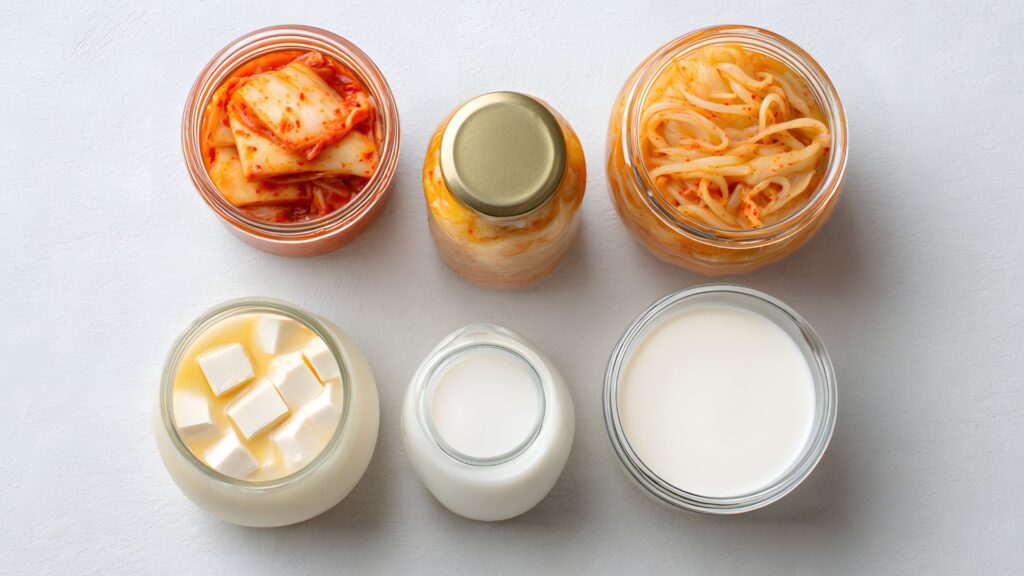
Yogurt and Kefir: These fermented dairy products contain diverse strains of bacteria. Kefir, in particular, often contains a greater number of bacterial strains and yeasts, including some that can survive the harsh stomach acid better than those found in standard yogurt. When selecting yogurt, always look for the phrase “live and active cultures” and opt for plain varieties to drastically reduce added sugar.
-
Sauerkraut and Kimchi: These fermented cabbage dishes are not just rich in probiotics; the fermentation process also enhances the bioavailability of B vitamins and reduces anti-nutritional factors like phytates.² Like yogurt, ensure they are unpasteurized and refrigerated (raw) to retain the essential live cultures.
-
Miso and Tempeh: Miso, a paste made from fermented soybeans, can contribute to digestion and immune function. Tempeh is a minimally processed, highly nutritious fermented soybean product that is an excellent source of protein and probiotics, making it ideal for plant-based diets.³
-
The Postbiotic Advantage: Beyond the live microbes, fermented foods deliver postbiotics—healthful chemical byproducts (metabolites) of fermentation, such as organic acids. These metabolites directly interact with immune cells and the gut barrier, contributing to reduced inflammation and enhanced nutrient absorption.⁴
2. The Foundation of Fiber: Prebiotic Foods
While probiotics seed the garden, prebiotics fertilize it. Prebiotics are specialized, non-digestible plant fibers that serve as the selective food source for the healthy probiotic bacteria already residing in your colon.⁵ They are the true backbone of any long-term digestive detox plan because they ensure the existing good bacteria are well-fed and able to produce vital short-chain fatty acids (SCFAs) like butyrate, which is the primary fuel for colon cells.
-
Chicory Root and Jerusalem Artichoke: These are among the richest sources of inulin, a type of fructan fiber and one of the most studied prebiotics.
-
Garlic, Onions, and Leeks: These common staples contain high levels of inulin and fructo-oligosaccharides (FOS), which specifically promote the growth of beneficial Bifidobacteria.
-
Asparagus and Bananas: Asparagus is another source of inulin. Bananas, especially when slightly green, contain resistant starch, a potent prebiotic that strongly stimulates butyrate production in the colon.⁶
-
Whole Grains and Legumes: Oats (rich in beta-glucan), barley, beans, and lentils are excellent sources of diverse soluble and insoluble fibers that bulk up stool, promote regularity, and provide a slow-fermenting food source for the entire microbial community.
3. Gut Soothers: Foods that Repair and Protect
A successful digestive detox plan must also focus on calming inflammation and repairing the gut lining (the intestinal barrier). This lining is essential for nutrient absorption and acts as a critical shield against toxins and pathogens.
-
Bone Broth and Collagen: Bone broth is a traditional food rich in collagen and gelatin. When consumed, these compounds break down into amino acids, notably Glutamine. Glutamine is the primary metabolic fuel for the enterocytes (the cells lining the small intestine) and is critical for strengthening the tight junctions that maintain the gut barrier integrity.⁷
-
Omega-3 Fatty Acids: Found abundantly in fatty fish (salmon, sardines) and certain seeds (flax, chia), Omega-3 Polyunsaturated Fatty Acids (PUFAs) have powerful anti-inflammatory properties. By modulating the gut microbiota and supporting a healthy Omega-6/Omega-3 ratio, they help soothe irritation and support the mucus barrier.⁸
-
Herbs and Spices: Ginger contains gingerol, which aids motility and reduces inflammation, making it excellent for nausea and discomfort. Turmeric, with its active compound curcumin, is a potent anti-inflammatory agent that has been shown to support gut barrier function.
The Holistic Detox Mindset
True detoxification is a continuous process supported by lifestyle, not just a short diet. To optimize your digestive detox plan, remember these non-food elements:
-
Hydration: Water is the cheapest and most effective detox agent. It supports the mucus barrier, aids nutrient absorption, and ensures fiber can pass smoothly, preventing constipation.
-
Limit Inflammatory Triggers: While adding beneficial foods, it is just as crucial to limit processed foods, excessive refined sugar, artificial sweeteners, and high intake of alcohol, all of which can damage the microbiome and inflame the gut lining.
-
Stress Management: Chronic stress elevates cortisol, which can disrupt the gut barrier and alter microbial balance. Integrating stress-reduction techniques (like deep breathing or walking) is a non-negotiable part of any holistic digestive detox plan.
By prioritizing these nutrient-dense, gut-friendly foods and integrating supportive lifestyle habits, you are not undergoing a temporary, harsh cleanse, but rather establishing a sustainable foundation that promotes deep, lasting health from the inside out.
Ready to Reset Your Health?
A truly healthy gut is key to unlocking optimal energy, mood, and immunity. Taking charge of your digestion is a foundational step toward overall health.
Schedule your discovery call today to explore natural, science-supported strategies and curate your digestive detox plan for healthy, sustainable digestive wellness and health management, without extreme restrictions.
Sources:
- ScienceDirect. (n.d.). Probiotics. Retrieved from https://www.sciencedirect.com/topics/food-science/probiotics
- Healthline. (n.d.). Benefits of Sauerkraut. Retrieved from https://www.healthline.com/nutrition/benefits-of-sauerkraut
- Jain, D., Bera, T., & Ghosh, A. (2023). Role of Fermented Foods in Gut Microbiota and Immune Health. BMC Microbiology. Retrieved from https://pmc.ncbi.nlm.nih.gov/articles/PMC11647071/
- ScienceDirect. (2023). Antimicrobial and Anti-inflammatory Properties of Omega-3 Fatty Acids. Retrieved from https://www.sciencedirect.com/science/article/pii/S2666154323002156
- Axe, J., et al. (2021). The Role of Resistant Starch in Gut Health. Nutrients. Retrieved from https://pmc.ncbi.nlm.nih.gov/articles/PMC8002343/
- Rao, V. P. (2018). Glutamine and Its Role in Intestinal Barrier Function. Journal of Clinical Gastroenterology. Retrieved from https://pmc.ncbi.nlm.nih.gov/articles/PMC6041804/
- Newberry, K. (2024). Glutamine: A misunderstood amino acid with therapeutic potential. ScienceDaily. Retrieved from https://www.researchgate.net/publication/393602180_Glutamine_A_misunderstood_amino_acid_with_therapeutic_potential
- ScienceDirect. (2025). Emerging evidence on postbiotics and their applications in human health. Retrieved from https://www.sciencedirect.com/science/article/pii/S2772753X25000358